
General Construction Safety Compliance
- By Justrite Safety Group
- Aug 27, 2025

General Construction Safety Compliance
Is your construction site compliant?
Safety standards aren’t set in stone. Regulations are updated in light of new research, safety data, and industry best practices. For construction companies, staying on top of these requirements while ensuring that operations can continue smoothly can be complicated.
Safety professionals need to ensure that training is up to date, the equipment on site is compliant, and that overall site conditions conform to the latest standards. Using quality safety solutions helps organizations stay ahead of regulatory changes. Products with smart designs, durable materials, and additional protective features are more likely to remain suitable even when compliance requirements become stricter.
Below you will find compliance standard common to construction jobsites and simple, construction-ready solutions that can help you meet these standards:

Build a Safer, More Compliant Jobsite
Get the white paper: Guide to Safety for the Construction Industry
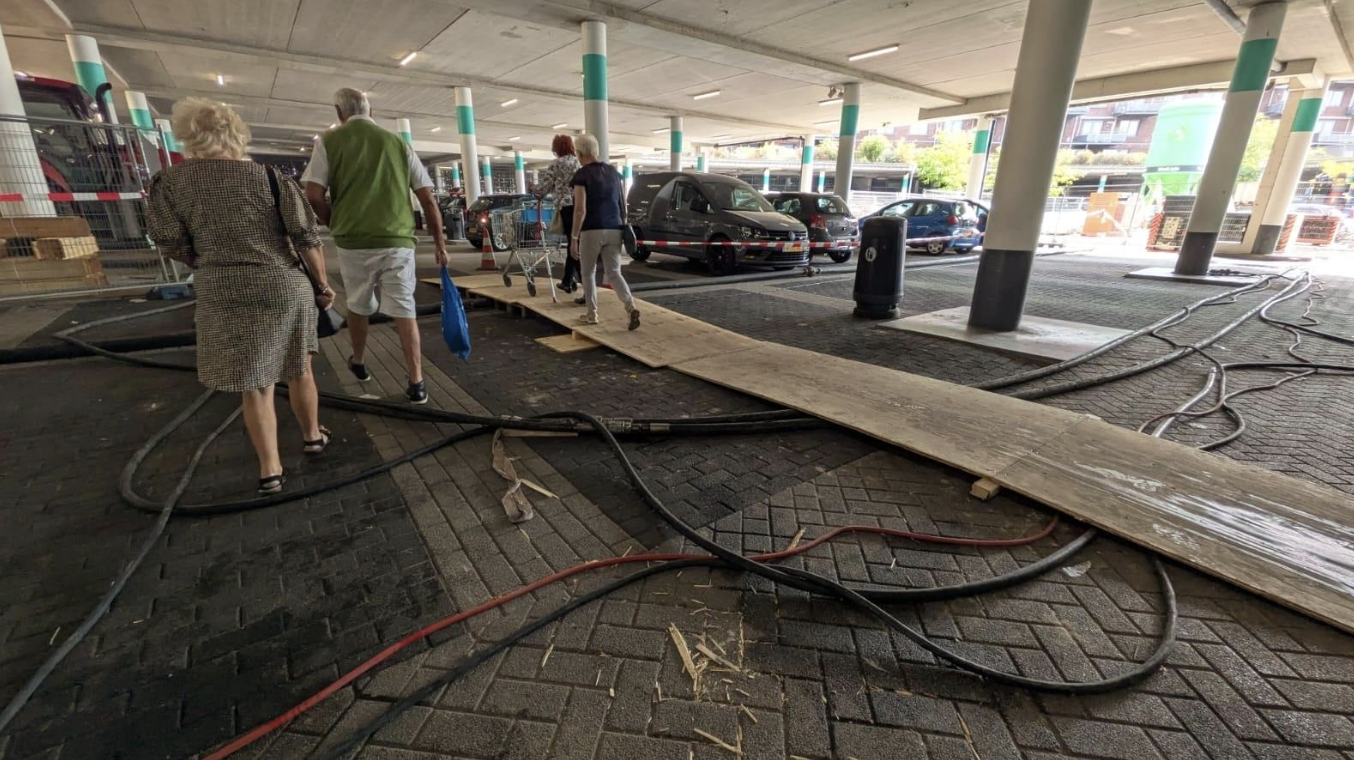
Standards and Regulations for Cable and Hose Protectors
There is no specific legislation in the U.S. or Canada stating that cables running over a road must be protected in every situation. However, multiple regulations address hazards from cords and imply the need for protection or other preventative measures.
Most relevant standards:
-
OSHA 1926 Subpart K (Electrical) — While this construction standard doesn’t have a specific rule for cables over roads, it does emphasize the need to protect employees from electrical hazards. This includes ensuring that cords and cables are not worn or frayed and are used in a way that doesn’t create a hazard. While not mentioned explicitly, cable protectors are one way to prevent cables and wires from becoming worn out.
- Section 1926.416(e)(2) states that extension cords shall not be fastened with staples, hung from nails, or suspended by wire, implying a need for proper management to prevent damage and hazards.
-
OSHA 1910 Subpart S (Electrical) — This section applies to general industry and has similar provisions regarding the safe use and condition of electrical cords and cables (1910.304(b)(3)(ii)(C)). It requires regular inspection of cord sets and prohibits the use of damaged equipment.
-
OSHA 1926.416(b)(2) (Passageways and open spaces) — This regulation states that working spaces, walkways, and similar locations shall be kept clear of cords so as not to create a hazard to employees. This could be interpreted to include temporary cables running across roadways within a construction or work zone. If the area can’t be cleared through routing, then cable and hose management using cable protectors is the next best option.
Featured Products to Help You Stay Compliant
-

-
 ADA Ramps for GD5X125 5-Channel Guard Dog® Cable Protector - CPRP-5GD-BLUModel No: CPRP-5GD-BLU$810.00
 -
 5-Channel Yellow Jacket® Heavy-Duty Cable Protector AMS® System AMS® System - YJ5-125-AMS-Y/BModel No: YJ5-125-AMS-Y/B$351.00
Standards and Regulations for Ground Protection Mats & Outrigger Pads
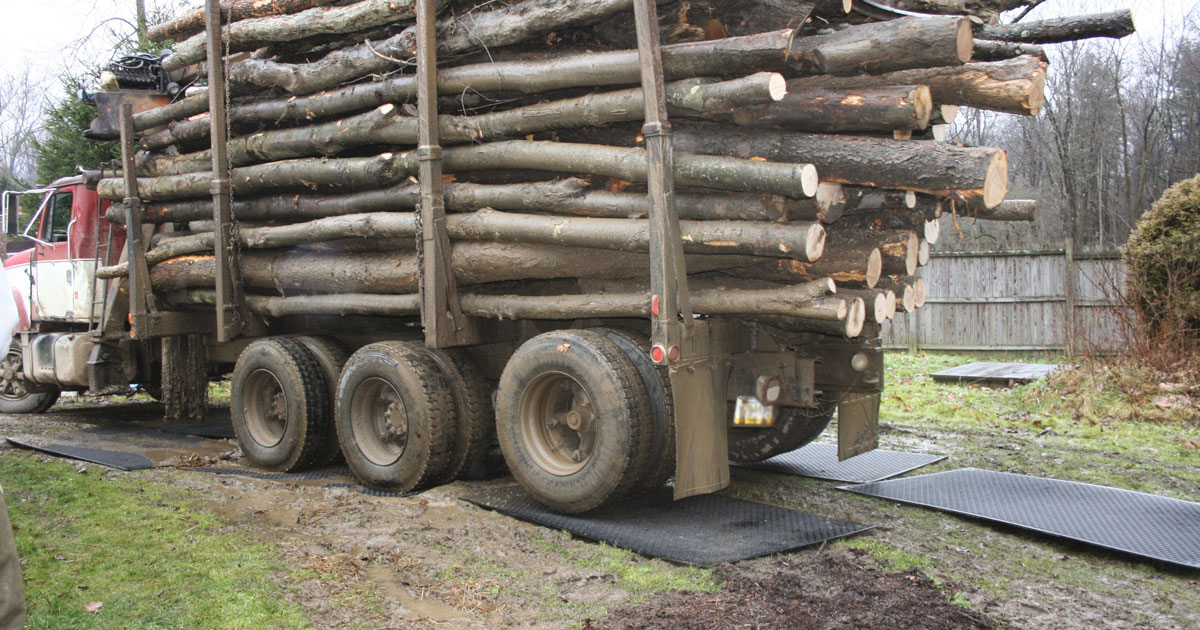
Ground protection mats and outrigger pads fall under general safety legislation and standards in both the United States and Canada. While there are no federal laws that cover them by name, their use is implied or required under broader safety legislation and equipment standards. The ubiquity of these devices also suggests they are an industry standard and likely to be treated as such in prosecutions or site inspections.
Relevant Legislation for Worksites in the United States
The Code of Federal Regulation for Health and Safety covers safe ground conditions in the following standards:
- 29 CFR 1926.1400 Subpart CC – Cranes and Derricks in Construction: Addresses crane safety, including requirements and recommendations for ground conditions.
- Section 1926.1402(b) stipulates the following that “The controlling entity must ensure that ground conditions are adequate to support the equipment, including the slope, compaction, and firmness.” Since outrigger pads or mats are a best practice for providing a stable base on less-than-ideal surfaces, their use is implied in this section.
Other standards also mention these. For example:
- The American Society of Mechanical Engineers standard ASME B30.5 – Mobile and Locomotive Cranes has clear specifications regarding ground mats and outrigger pads, including the use of pads, mats, or cribbing to distribute the load from the equipment, especially on soft or uneven ground.
- The American National Standards Institute’s ANSI A10.31 – Safety Requirements for Digger Derricks clarifies that digger derricks require suitable support for outriggers to ensure stability.
Relevant Legislation for Worksites in Canada
The Canadian Standards Association CSA Z150 – Safety Code on Mobile Cranes emphasizes the need for stability when using cranes and recommends or requires ground mats or pads when working on soft or unstable ground.
Additionally, there are implied requirements in provincial legislation mandating that employers ensure the stability of mobile equipment. For example:
- Alberta’s OHS Code, Part 6 – Cranes, Hoists and Lifting Devices has multiple sections referencing outriggers as stability controls for mobile cranes, boom cranes and concrete pumps. Article 90, for instance, states that ”If outriggers are installed on a mobile crane or boom truck, the employer must ensure the outriggers are extended and supported by solid footings before being used.“
- In Ontario Regulation 213/91 – Construction Projects, the use of outriggers (and implicitly, outrigger pads) is included in several sections. For instance, Section 144 Elevating Work Platforms discusses the need to verify soil firmness when using the outrigger platform in an elevated position. Likewise, section 156 specifies that the outrigger on a hoisting device “shall rest on blocking able to support the crane or other hoisting device and its maximum load without failure and without deformation or settlement which affects its stability.”
Manufacturer Requirements
- Crane, aerial lift, and derrick manufacturers often mandate the use of outrigger pads to meet warranty or safety criteria. Since crawler cranes and rigs often weigh more than working surfaces can support, manufacturers frequently recommend building a driving surface or work platform to distribute the weight of the equipment.
Featured Products to Help You Stay Compliant
-
 4' x 8' AlturnaMAT® Ground Protection Mat, 120 Ton Load Capacity, Clear - CM48Model No: CM48$341.00
 -

Standards and Regulations for Warning Whips
Warning whips are generally not mandated by name in Canadian or U.S. legislation, but their use is implied under requirements for vehicle visibility, blind spot mitigation, and collision prevention. Many large contractors mandate whips through internal policies, often exceeding minimum regulatory requirements.
Relevant Legislation for Worksites in the United States
There is no clear OSHA direction regarding the use of warning whips. However, whips are considered best practice in several industries and implied by the general duty requirement to provide a safe workplace.
Relevant Legislation for Worksites in Canada
Although there is no direct mention of vehicle whips in the legislation, there are many provincial standards that may be relevant. For example, Alberta OHS Code Part 19 – Powered Mobile Equipment includes requirements for ensuring that mobile equipment is visible and can be detected, especially when operating near other vehicles or people. It states that if a vehicle can’t be equipped with an audible alarm when maneuvering in a direction where the operator has an obstructed view, the operator should follow the direction of traffic control or warning system. In this case, the whip can be understood to be part of the traffic control plan and a warning system at the same time.
Featured Products to Help You Stay Compliant
-
 All-Purpose 8' Amber LED Wrapped Lighted Warning Whip, w/ Orange Flag and Amber Light - FSLEDA8OYAModel No: FSLEDA8OYA$363.00

Standards and Regulations for Wheel Chocks
Relevant Legislation for Worksites in the United States
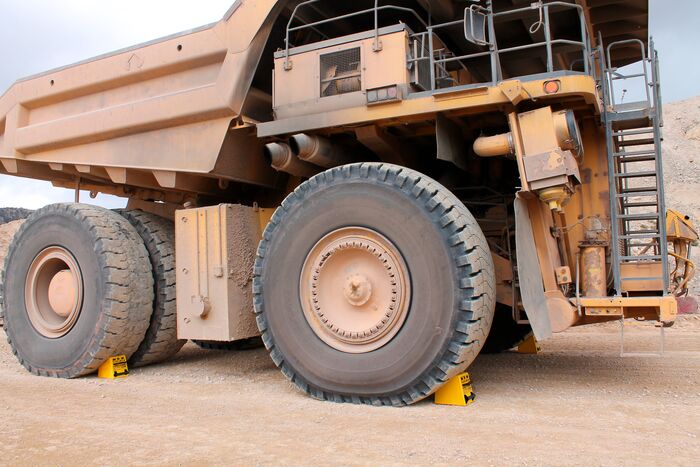
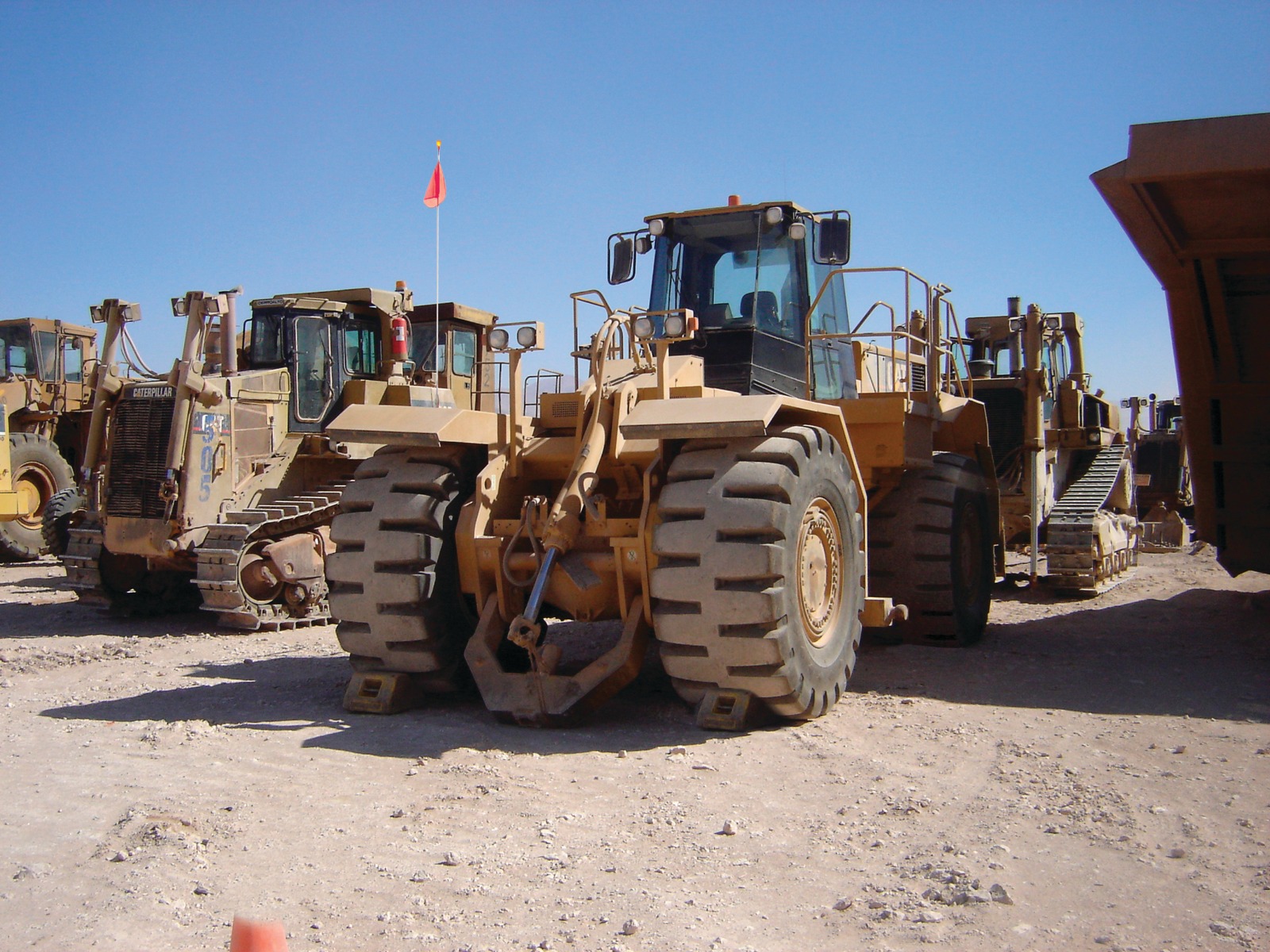
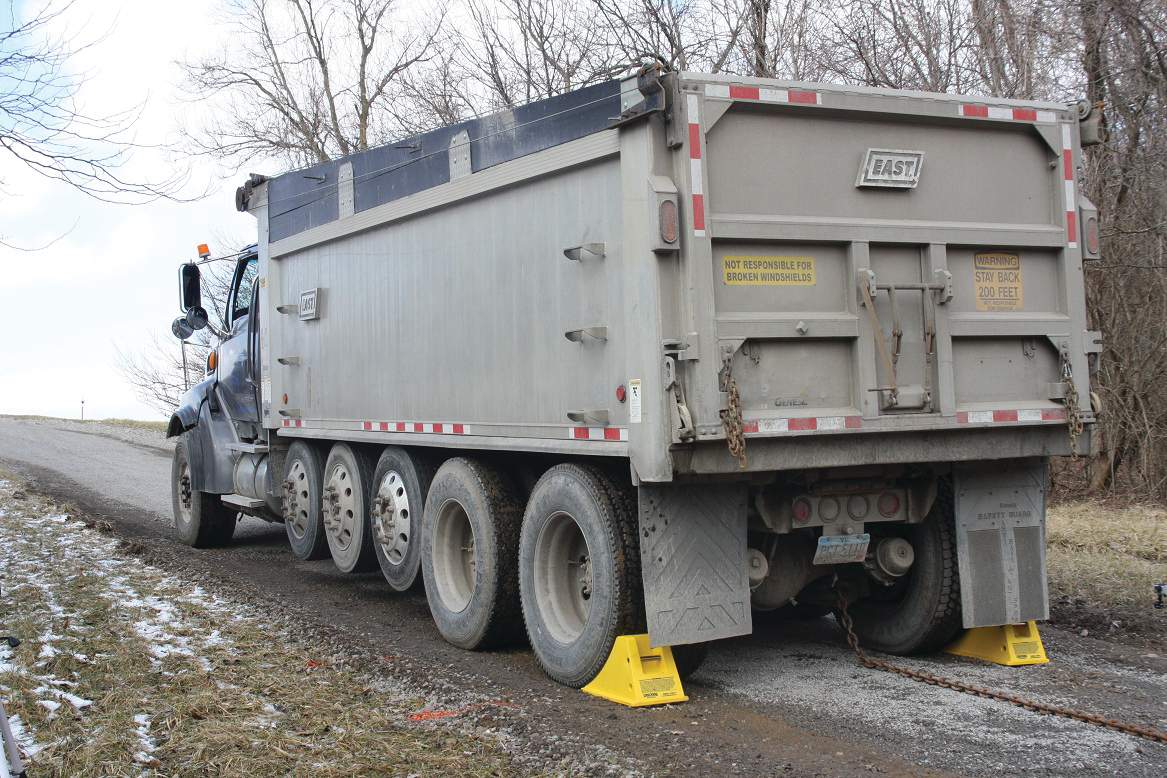
Enforcement of wheel chocks is split between Occupational Safety and Health Administration (OSHA) for private worksites and roadways and the Federal Motor Carrier Safety Association (FMCSA) for commercial vehicles on public roadways. OSHA mandates the use of wheel chocks on worksites and on vehicles that are not on a public road. FMCSA also requires the use of wheel chocks, except when loading or unloading commercial vehicles with air brakes, as the air brakes are deemed sufficient to prevent rollaway.
Relevant Legislation for Worksites in Canada
Several provincial safety regulations make reference to wheel chocks. For example, WorkSafeBC mandates mobile equipment operators to secure against inadvertent movement by setting brakes and chocking wheels when leaving the equipment unattended.
Featured Products to Help You Stay Compliant
-
 General-Purpose Utility Wheel Chock, 30,000 lbs Load Capacity, 27-35 in. Tires - UC1700Model No: UC1700$40.00
 -

-
 All-Terrain Heavy-Duty Wheel Chock with Rubber Pad, 40 Ton Capacity, 28-38 in. Tires - AT3512-RP-YModel No: AT3512-RP-Y$239.00
The user is solely responsible for ensuring compliance with all applicable local, state, and federal rules, regulations, and laws, including the Federal Mine Safety and Health Act and the Occupational Safety and Health Act. The information provided herein does not constitute legal advice and should not be relied upon as a substitute for independent verification of compliance obligations.