
Wheel Chocks in Construction
- By Justrite Safety Group
- Aug 27, 2025
Wheel Chocks in Construction
Are Your Wheel Chocks Up to Code? Compliance Tips for Securing Heavy Equipment
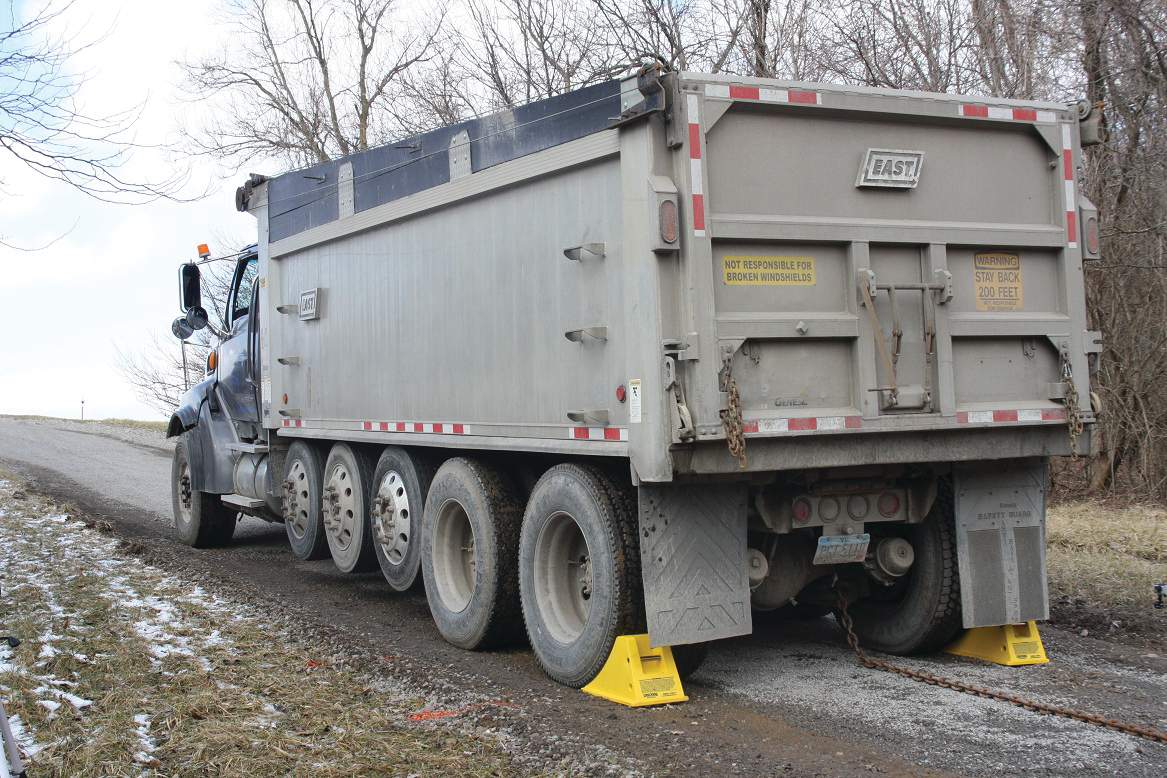
Wheel chocks are one of the simplest and most effective safety tools on a jobsite. They prevent vehicles from rolling during loading, unloading, or maintenance. Yet, met many construction crews still rely on improvised or poorly suited solutions. That’s a risk not worth taking.
OSHA and FMCSA regulations outline when and where wheel chocks must be used, especially when air brakes are not sufficient or vehicles are left unattended. Checkers' high-performance polyurethane chocks are built for extreme loads, with slip-resistant textures and bright colors for quick visual verification.
Durability matters. Rubber degrades, wood breaks, and metal rusts, especially in harsh outdoor conditions. Checkers’ products stand up to time, UV, and chemical exposure, and they’re available in sizes fit for everything from pickups to haul trucks that weigh up to 1.6M lbs.

Build a Safer, More Compliant Jobsite
Get the white paper: Guide to Safety for the Construction Industry
Featured Products
-
 General-Purpose Utility Wheel Chock, 30,000 lbs Load Capacity, 27-35 in. Tires - UC1700Model No: UC1700$40.00
 -

-
 All-Terrain Heavy-Duty Wheel Chock with Rubber Pad, 40 Ton Capacity, 28-38 in. Tires - AT3512-RP-YModel No: AT3512-RP-Y$239.00
FAQs:
Q1: Are wheel chocks required by OSHA or FMCSA?
A: Yes. OSHA and FMCSA require wheel chocks in situations where vehicle movement may occur, especially when air brakes are disengaged or during maintenance and loading/unloading operations.
Q2: What type of wheel chock is best for heavy equipment?
A: Heavy-duty polyurethane chocks, like the Checkers MC3009 or AT3512, are ideal for large trucks and heavy equipment thanks to their high load capacity, UV resistance, and non-slip base.
Q3: Can I use wood or rubber wheel chocks on a construction site?
A: While commonly used, wood and traditional rubber are less durable and degrade faster than polyurethane. Checkers’ chocks outperform these materials in harsh outdoor conditions.
Q4: How do I size a wheel chock correctly?
A: Chock size depends on the tire diameter and vehicle weight. Always refer to the manufacturer’s recommendations for proper sizing and usage.
Q5: Where should wheel chocks be placed?
A: Place chocks snugly against the downhill side of the wheels. For more information on how to chock, please check this guide: A Guide to Wheel Chock Installation and Safety | Checkers Safety.