
Wheel Chocks in Mining
- By Justrite Safety Group
- Aug 22, 2025
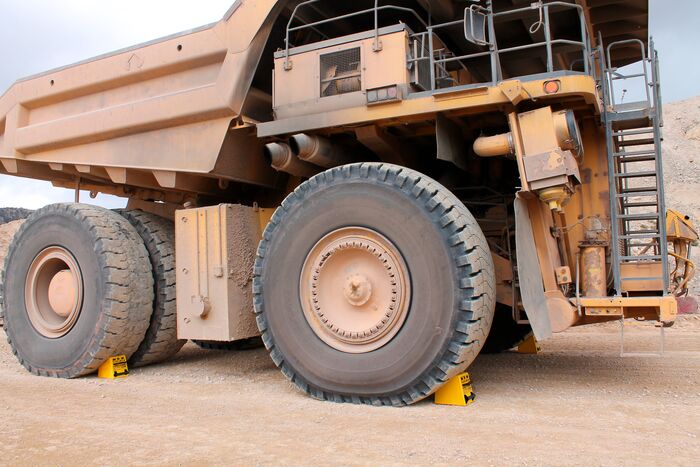
Wheel Chocks in Mining
Wheel Chocks in Mining: Are You Really Covered?
In mining environments where vehicles often operate on uneven terrain or sloped surfaces, the risk of unintentional movement is significant. Relying solely on the parking brake or air brake system isn’t enough. Accidental rollaways are a serious hazard, especially when vehicles are being loaded, unloaded, or left unattended.
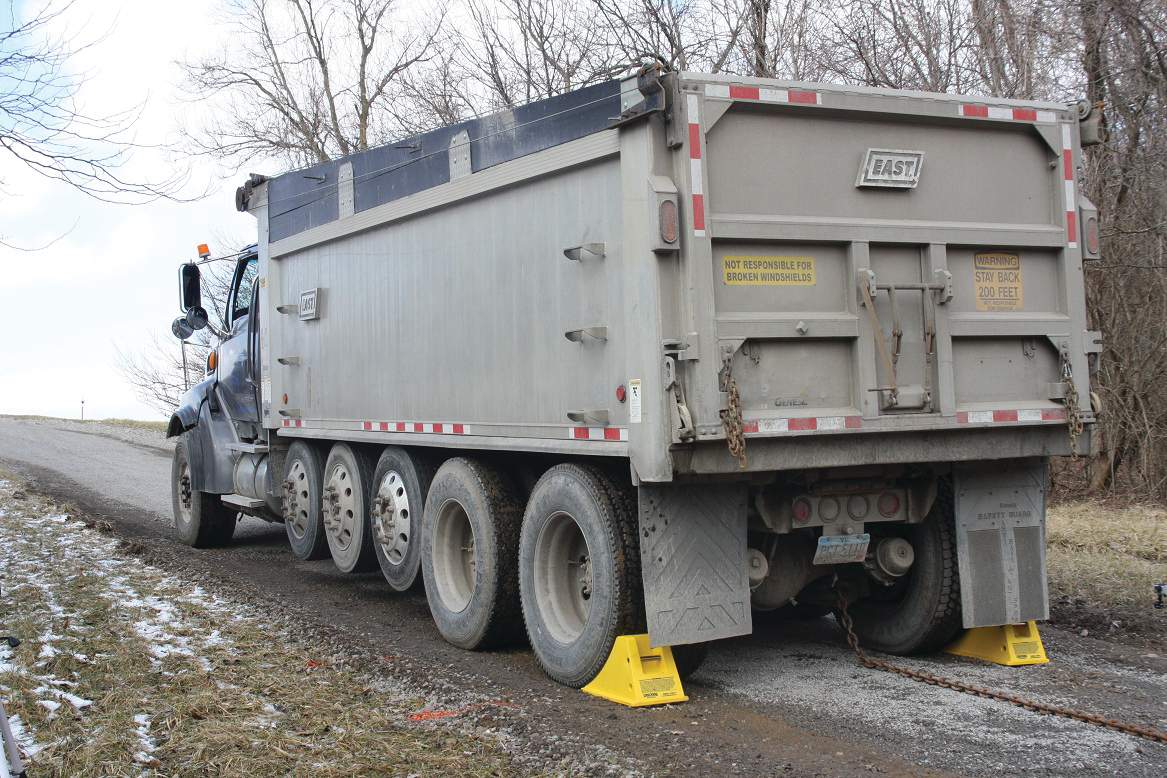
Wheel chocks provide an essential layer of secondary protection. These simple but effective tools wedge securely against the tires to prevent rolling. While wood and rubber chocks are commonly used, they don’t perform well under the extreme demands of mining. Polyurethane wheel chocks, like those offered by Checkers, are designed specifically to endure high loads, resist UV and chemical exposure, and remain highly visible in poor lighting conditions.
Checkers’ HDPE and polyurethane chocks are lightweight, easy to transport, and come in multiple sizes to suit equipment ranging from pickups to 800-ton haul trucks. Several models also include anti-slip pads or cleated bases for improved grip on slick or sloped surfaces.
Compliance with OSHA, FMCSA, and Canadian mining regulations often requires wheel chocking as a standard procedure. For example, OSHA mandates chocking for commercial vehicles unless air brakes are fully engaged and attended. In Canadian mining provinces, operators must chock wheels when equipment is parked on inclines or left unmonitored.
Build a Safer, More Compliant Jobsite
Get the white paper: Safety for the Mining Industry
Featured Products
-
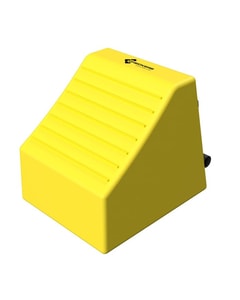 Heavy-Duty Ultra Class Mining Wheel Chock, 95-165 In. Tire Dia., 800 Ton Capacity – MC4011Model No: MC4011$626.00
 -
 General-Purpose Utility Wheel Chock, 30,000 lbs Load Capacity, 27-35 in. Tires - UC1700Model No: UC1700$40.00
 -
 All-Terrain Heavy-Duty Wheel Chock with Rubber Pad, 40 Ton Capacity, 28-38 in. Tires - AT3512-RP-YModel No: AT3512-RP-Y$239.00
FAQ: Wheel Chocks
Q1: Are wheel chocks required in mining operations?
A: Yes. OSHA, FMCSA, and Canadian regulations require chocks when equipment is left unattended.
Q2: What material is best for mining wheel chocks?
A: High-density polyethylene (HDPE) or polyurethane for durability and visibility.
Q3: How do I size a wheel chock correctly?
A: The chock should be about 25% the height of the tire and rated for the vehicle's weight.
Q4: Do polyurethane chocks last longer?
A: Yes. They resist UV, chemicals, and water, making them ideal for long-term outdoor use.